Commercial Pressure Washing in Burlington County, NJ: What Should Your Maintenance Plan Include?
Request A Free Quote
Please call to schedule, or use the form below to request an appointment.
First impressions matter when customers, tenants and visitors arrive at your commercial property. Dirty sidewalks, stained concrete, grimy building entrances and discolored exterior surfaces can make even a well-maintained building look neglected.
For commercial property managers throughout Burlington County and South Jersey, regular exterior cleaning is an important part of maintaining a professional appearance.
Commercial pressure washing can help remove accumulated dirt, organic growth and other surface contaminants from appropriate exterior surfaces. When planned correctly, it can also help property managers organize routine maintenance and keep high-traffic areas looking their best.
At Squeegee Squad Burlington County, NJ, we provide exterior cleaning services to help commercial property owners maintain clean, presentable properties.
Here’s what to consider when planning a commercial pressure washing project.
What is included in commercial pressure washing?
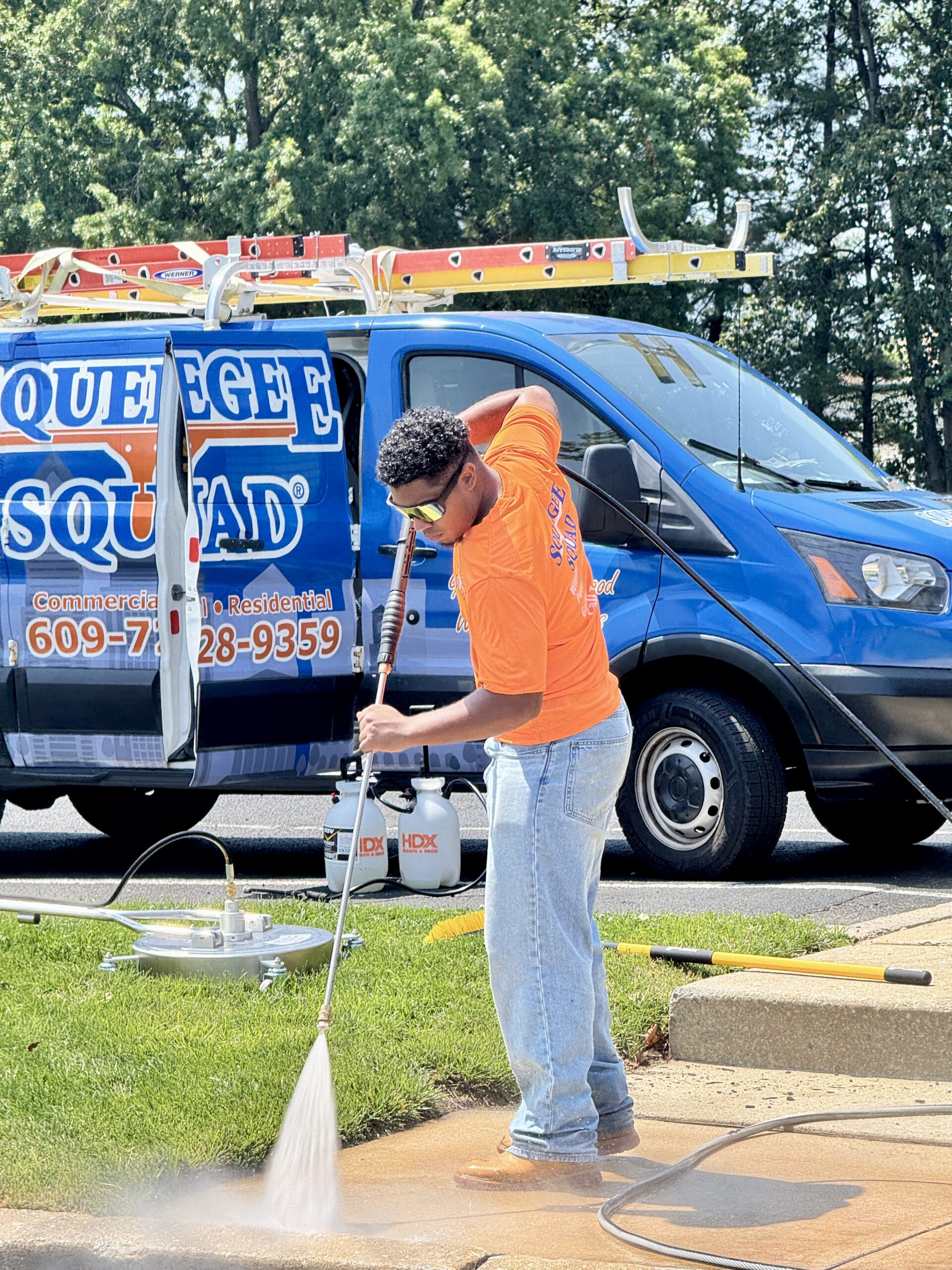
Commercial pressure washing involves cleaning suitable exterior surfaces using pressurized water and, when appropriate, compatible cleaning solutions.
The exact scope depends on the property, its surfaces and the types of contaminants that need to be removed.
Common areas that may benefit from commercial pressure washing include:
- Sidewalks and walkways: Remove accumulated dirt and certain organic stains from pedestrian areas.
- Concrete entrances: Clean suitable concrete surfaces around building entrances and common areas.
- Parking areas: Address dirt and certain surface stains in appropriate sections of parking lots and garages.
- Building exteriors: Clean compatible exterior materials using methods appropriate for the surface.
- Storefront surroundings: Improve the appearance of exterior areas around retail entrances and customer-facing spaces.
- Loading and service areas: Remove suitable surface contaminants from designated areas around commercial facilities.
- Outdoor common areas: Maintain appropriate patios, gathering spaces and other exterior areas.
Not every surface should be cleaned using high pressure. Painted finishes, delicate masonry, certain siding materials, electrical equipment and vulnerable building components may require lower-pressure techniques or specialized cleaning methods.
A professional assessment helps determine the appropriate approach for each area.
Why is regular commercial pressure washing important?
Exterior surfaces are exposed to weather, vehicle traffic, foot traffic, landscaping debris and environmental contaminants throughout the year.
Without routine maintenance, dirt and organic growth can gradually accumulate, particularly in shaded areas and locations that remain damp.
Here are several reasons property managers include pressure washing in their maintenance plans.
1. Maintain a professional appearance
Building entrances, sidewalks and walkways are among the first areas visitors notice.
Dirty concrete and stained exterior surfaces can detract from the overall appearance of an office building, retail center or apartment community.
Regular cleaning helps maintain a more welcoming environment for tenants, employees, customers and visitors.
2. Address accumulated dirt and organic growth
Moisture and shade can contribute to the buildup of algae, mildew and other organic growth on suitable exterior surfaces.
Depending on the surface and the contaminant, professional cleaning can help remove this buildup and improve the appearance of the affected area.
The appropriate cleaning method matters. Using excessive pressure or an incompatible chemical can damage surfaces rather than improve them.
3. Support routine property maintenance
A scheduled cleaning program helps property managers address exterior maintenance before dirt and staining become especially noticeable.
It also makes it easier to coordinate cleaning with landscaping, window washing and other scheduled property services.
4. Help maintain appropriate walking surfaces
Organic growth, residue and other contaminants may affect traction on some exterior walking surfaces, particularly when wet.
Cleaning can be one part of a broader walkway maintenance program. However, pressure washing alone does not guarantee that a surface will be slip-resistant. Drainage, surface condition, repairs and appropriate safety measures also matter.
5. Help protect the appearance of exterior materials
Some contaminants can become more difficult to remove as they accumulate.
Routine cleaning can help manage surface buildup and make ongoing maintenance more predictable. It is not a substitute for repairing deteriorated concrete, damaged siding, failing coatings or other underlying problems.
Which commercial properties benefit from pressure washing?
Different types of commercial properties have different exterior cleaning requirements.
Office buildings
Office buildings often benefit from cleaning sidewalks, entrances, concrete areas and other high-visibility exterior surfaces.
A clean entrance can complement regular window cleaning and help maintain a professional environment for employees and visitors.
Retail centers and shopping plazas
Retail properties experience regular pedestrian and vehicle traffic. Storefront surroundings, sidewalks and common walkways can accumulate dirt and stains quickly.
Cleaning schedules should account for customer activity, operating hours and access requirements.
Apartment communities and condominiums
Multifamily properties often include shared walkways, entrances, pool decks, patios and other common areas.
Property managers can prioritize the areas residents and visitors use most frequently, while ensuring that cleaning methods are appropriate for each surface.
Warehouses and industrial facilities
Warehouses and industrial properties may have loading areas, service entrances and exterior concrete that require periodic cleaning.
These locations can involve oil, grease or other specialized contaminants. Certain substances require specific handling and wastewater controls, so the cleaning method should be selected based on the material involved.
Restaurants and hospitality properties
Restaurants and hospitality businesses often prioritize entrances, patios and outdoor customer areas.
Cleaning can help maintain the appearance of these spaces, but grease and food-related contamination may require specialized procedures rather than ordinary pressure washing.
How often should commercial properties be pressure washed?
There is no single cleaning schedule that works for every commercial property.
The appropriate frequency depends on surface type, traffic levels, weather exposure, nearby landscaping and the amount of contamination present.
As a starting point, property managers can consider the following general schedule:
Monthly or as needed: High-traffic entrances, selected storefront areas and surfaces that become dirty quickly.
Quarterly: Common walkways, selected concrete areas and other exterior surfaces with moderate exposure to dirt.
Twice a year: General exterior maintenance for properties that accumulate less contamination, often scheduled around spring and fall.
Annually: Areas that remain relatively clean and do not require more frequent service.
These are planning guidelines, not strict requirements. A retail center near a busy roadway may need more frequent cleaning than an office building in a quieter location.
Property managers should inspect their buildings regularly and adjust the schedule based on actual conditions.
When is the best time to pressure wash a commercial property in South Jersey?
Seasonal planning can make exterior cleaning easier to coordinate.
Spring cleaning
Spring is a popular time to remove accumulated winter dirt, road residue and organic debris.
It is also an opportunity to prepare sidewalks, entrances and outdoor common areas for increased activity during warmer weather.
Summer maintenance
Summer can be a practical time to clean many exterior surfaces, depending on the weather and the property’s operating schedule.
Commercial properties with patios, outdoor seating and heavily used walkways may benefit from additional attention during this period.
Fall cleaning
Fall cleaning can help remove accumulated dirt and organic debris before winter.
Property managers may choose to coordinate pressure washing with exterior window cleaning and other seasonal maintenance services.
Winter considerations
Cold weather can make exterior cleaning more complicated.
Freezing temperatures can create hazards when water remains on sidewalks, steps and other walking surfaces. Cleaning should be scheduled only when conditions and the chosen methods allow for safe work, proper drying and appropriate wastewater management.
What should a commercial pressure washing proposal include?
Before hiring a contractor, property managers should understand exactly what the proposed service covers.
A detailed scope of work helps prevent misunderstandings and makes it easier to compare quotes.
Consider the following items when reviewing a proposal.
1. Areas to be cleaned
The proposal should identify the sidewalks, entrances, concrete areas, building surfaces and other locations included in the project.
2. Surface types
Different materials require different cleaning methods. The contractor should understand the surfaces involved and identify any areas that require special treatment.
3. Cleaning methods
The proposed method should reflect the surface condition and the type of contamination. Some surfaces require lower pressure, soft washing or specialized cleaning solutions.
4. Stain treatment
Ordinary surface dirt, rust, oil, grease and mineral deposits do not all respond to the same cleaning process.
Ask which stains are included in the scope and whether additional treatment will be priced separately.
5. Scheduling and site access
Commercial projects may need to be coordinated around business hours, pedestrian traffic, parking availability and tenant activity.
The proposal should account for any access restrictions or scheduling requirements.
6. Water management
The contractor should consider where wash water will flow and whether local requirements impose restrictions on discharging water containing detergents, oils or other contaminants.
7. Insurance and safety
Ask for proof of appropriate insurance and details about how the contractor will manage pedestrian access, equipment and other site-specific safety concerns.
8. Clear pricing
A written proposal should identify the included work, any exclusions and any additional charges that could apply.
A well-defined scope makes it easier to manage expectations and budget for future exterior maintenance.
Can you combine commercial pressure washing with window cleaning?
Yes. Coordinating pressure washing and window cleaning can help commercial property managers organize their exterior maintenance more efficiently.
For example, a property might schedule cleaning for sidewalks, concrete entrances and other suitable surfaces alongside its regular window cleaning service.
The order of work matters. Depending on the surfaces and cleaning methods, pressure washing may be scheduled before window cleaning so that loosened dirt and splashing do not recontaminate freshly cleaned glass.
The appropriate sequence should be determined for each property.
Combining services may also simplify scheduling and reduce the need to coordinate multiple visits, although the cost savings will depend on the scope of work and the property’s requirements.
Learn more about our commercial exterior cleaning services in Burlington County, NJ.
How much does commercial pressure washing cost in Burlington County, NJ?
Commercial pressure washing prices vary depending on the property and the work involved.
Important factors include:
- Total area: Larger properties generally require more labor and equipment time.
- Surface material: Concrete, masonry, siding and other materials have different cleaning requirements.
- Level of buildup: Heavy staining or extensive organic growth may require additional preparation or treatment.
- Accessibility: Obstacles, restricted access and site layout can affect productivity.
- Water availability: The property’s water supply and other site conditions may affect project planning.
- Specialized stain removal: Oil, grease, rust and other difficult contaminants may require additional treatment.
- Scheduling requirements: After-hours work or restrictions on access may affect the proposal.
- Wastewater management: Special handling may be necessary where contaminants or local regulations require it.
For commercial property managers, the most useful quote is one based on the actual property and a clearly defined scope of work.
A written proposal also makes it easier to plan recurring maintenance and compare contractors on more than price alone.
How can property managers create a year-round exterior cleaning plan?
A structured maintenance plan can help keep exterior cleaning organized throughout the year.
Start by identifying the property’s most visible and frequently used areas. Entrances, storefronts, sidewalks and shared walkways may need more attention than less exposed sections of the building.
Next, establish a practical cleaning schedule based on the property’s needs and maintenance budget.
Consider coordinating pressure washing with commercial window cleaning, seasonal landscaping and other exterior maintenance activities.
Finally, document the work completed and review the results. This allows property managers to adjust future cleaning schedules based on actual conditions rather than relying on a fixed calendar alone.
A proactive approach can help maintain a consistent appearance and make it easier to plan exterior maintenance expenses.
Frequently asked questions
Is pressure washing safe for every commercial building?
No. The appropriate cleaning method depends on the surface, its condition and the type of contamination. Some materials require lower pressure or specialized cleaning techniques to prevent damage.
Does pressure washing remove every stain?
No. Some stains, including certain oil, rust and mineral deposits, may require specialized treatments. Results depend on the contaminant, the surface and how long the stain has been present.
Should sidewalks be pressure washed before winter?
Cleaning before winter may be beneficial when weather and site conditions permit. However, water must not be allowed to freeze on walking surfaces, and the timing should account for temperatures and drying conditions.
Can pressure washing damage concrete?
Improper pressure, unsuitable equipment or incorrect technique can damage concrete, particularly if the surface is deteriorated or has a vulnerable finish. The cleaning method should be selected based on the concrete’s condition.
Does commercial pressure washing include window cleaning?
Not necessarily. Pressure washing and window cleaning are separate services, although they can be coordinated as part of a broader exterior maintenance plan.
Can pressure washing help apartment communities maintain common areas?
Yes. Appropriate cleaning methods can help maintain the appearance of suitable sidewalks, entrances and other shared exterior surfaces. The scope should account for residents, pedestrian access, surface conditions and water management.
Schedule Commercial Pressure Washing in Burlington County, NJ
A clean commercial property makes a stronger first impression and helps property managers stay on top of routine exterior maintenance.
From sidewalks and entrances to other appropriate exterior surfaces, a well-planned cleaning schedule can help keep your property looking professional throughout the year.
Squeegee Squad Burlington County, NJ provides commercial exterior cleaning services for businesses, property managers and building owners throughout Burlington County and surrounding South Jersey communities.
Ready to plan your next exterior cleaning project?
Visit our commercial services page or call 609-728-9359 to discuss your property’s cleaning needs and request a quote.
Let Squeegee Squad Burlington County, NJ help you keep your commercial property clean, presentable and ready to welcome customers, tenants and visitors.
Our Blog
Commercial Pressure Washing in Burlington County, NJ: What Should Your Maintenance Plan Include?
First impressions matter when customers, tenants and visitors arrive at your commercial property. Dirty sidewalks, stained concrete, grimy building entrances and discolored exterior surfaces can make even a well-maintained building look neglected. For commercial property managers throughout Burlington County and South Jersey, regular exterior cleaning is an important part of maintaining a professional appearance. Commercial...
Read More
How Often Should Commercial Buildings Have Their Windows Cleaned in South Jersey?
Clean windows make a difference in how customers, tenants and visitors perceive a commercial property. From office buildings and retail centers to apartment communities and medical facilities, maintaining clear glass helps create a professional appearance while supporting a consistent exterior maintenance program. But how often should commercial windows actually be cleaned? For property managers in...
Read More
Who Replaces Commercial Window Caulking and Sealants in Burlington County, NJ?
Commercial buildings depend on properly maintained window seals, perimeter caulking and exterior joints to help keep water and outside air from entering the building. When these materials begin to fail, property managers may notice leaks, drafts, water stains or deteriorating sealant around windows. At Squeegee Squad Burlington County, NJ, we help commercial property owners and...
Read More